
Contents
- 1 Why Digital Courses Are Powerful Income Assets
- 2 What a Digital Course Actually Is
- 3 The Biggest Mistake Beginners Make
- 4 Step 1: Choose the Right Course Idea
- 5 Step 3: Structure the Course for Results
- 6 Step 4: Create the Course (Without Overcomplicating It)
- 7 Step 5: Price Your Digital Course Strategically
- 8 Step 6: Sell Your Digital Course
- 9 How Much Can You Make Selling a Digital Course?
- 10 Common Digital Course Mistakes
- 11 Final Thoughts
- 12 Download the Digital Course Starter Guide
How to Create and Sell a Digital Course
Digital courses have become one of the most powerful ways to build income online.
But most beginners approach them backwards.
If you’re searching for how to create and sell a digital course, you’re likely wondering:
- How do I choose the right course idea?
- Do I need an audience first?
- What platform should I use?
- How do I actually sell an online course?
- Can beginners really make money with digital courses?
This step-by-step guide will show you how to create an online course, validate it properly, and build a simple system to sell it — without hype, overproduction, or complicated funnels.
Why Digital Courses Are Powerful Income Assets
Digital courses work because they combine:
- Expertise
- Scalability
- Ownership
- High margins
Once created, a course can be:
- Sold repeatedly
- Updated occasionally
- Delivered automatically
- Bundled with other products
- Expanded into higher-level offers
Unlike social media posts, which disappear in feeds, a course becomes a long-term asset.
But most beginners build them the wrong way.
They start by recording videos.
That’s backwards.
What a Digital Course Actually Is
At its core, a digital course is:
A structured path that helps someone achieve a specific outcome.
It is not:
- A collection of random lessons
- A repackaged blog archive
- A long set of unstructured videos
A good digital course:
- Solves one clear problem
- Moves students from A to B
- Is structured logically
- Is outcome-focused
Courses can be delivered through:
- Video lessons
- Text-based modules
- Downloadable worksheets
- Audio lessons
- Cohort-based live sessions
- Evergreen automated platforms
The format matters less than the outcome.
How Digital Courses Make Money
Understanding how digital courses generate income helps you design them properly.
Digital courses make money through:
- One-time purchases
- Payment plans
- Tiered pricing
- Bundled offers
- Upsells and advanced programs
Income depends on:
Audience size × Conversion rate × Price.
For example:
- 1,000 email subscribers
- 3% conversion rate
- $149 course
That’s 30 sales = $4,470.
Courses are scalable because:
- Delivery is automated
- Margins are high
- Costs remain low
This is why many creators build digital courses as long-term income assets.
The Biggest Mistake Beginners Make
Most beginners ask:
“What platform should I use?”
“What camera do I need?”
“How do I record videos?”
Those are production questions.
The real question is:
Is this course idea something people will actually pay for?
The biggest mistake in creating a digital course is building before validating.
You do not need to build first.
You need to validate first.
Step 1: Choose the Right Course Idea
A profitable digital course begins with:
- A clear problem
- A defined audience
- A measurable outcome
Instead of asking:
“What do I know?”
Ask:
“What problem can I help someone solve?”
Strong course ideas usually:
- Solve painful problems
- Save time
- Increase income
- Improve skills
- Reduce complexity
For example:
Weak idea:
“Social media tips.”
Stronger idea:
“How to grow your first 1,000 Instagram followers as a fitness coach.”
Specificity increases demand.
Inside the Digital Course Starter Guide, you’ll find a structured worksheet to refine your idea properly.
Step 2: Validate Your Course Idea Before You Build
One of the biggest mistakes beginners make when learning how to create an online course is building before validating.
Validation means confirming:
- People want the outcome
- They are willing to pay
- The problem is specific and painful
Ways to validate a digital course idea:
- Ask your audience directly
- Run a short survey
- Offer a beta version
- Pre-sell seats
- Host a paid workshop
If people are willing to pay for early access, your idea has demand.
If not, adjust before investing time in production.
The Digital Course Starter Guide includes a full validation framework you can use before recording a single lesson.
Step 3: Structure the Course for Results
Once validated, structure your course around outcomes.
Each module should:
- Move the student forward
- Build logically on the previous lesson
- Avoid overwhelming complexity
A simple structure might look like:
Module 1: Foundations
Module 2: Core Strategy
Module 3: Implementation
Module 4: Optimization
Avoid:
- 50+ lessons
- Excessive theory
- Overproduction
Clarity beats quantity.
In the Starter Guide, I outline a clean module planning framework you can follow.
Step 4: Create the Course (Without Overcomplicating It)
You do not need:
- A professional studio
- Expensive editing software
- Cinematic production
You need:
- Clear audio
- Structured content
- Simple slides (if necessary)
- Organized delivery
Start with:
- Screen recordings
- Slide presentations
- Simple talking-head videos
Focus on:
Helping, not impressing.
You can always improve production later.
Best Platforms to Sell a Digital Course
Many beginners ask:
“What is the best platform to sell an online course?”
There are two main options:
Hosted Platforms
All-in-one systems that handle:
- Course hosting
- Payments
- Student access
- Basic marketing tools
Self-Hosted Solutions
Using:
- Your own website
- Payment processors
- Course plugins
Platform choice depends on:
- Technical comfort
- Budget
- Customization needs
- Long-term plans
The platform matters — but validation and marketing matter more.
Avoid delaying progress by obsessing over tools.
Step 5: Price Your Digital Course Strategically
Beginners often underprice.
Others overprice without validation.
Pricing depends on:
- The value of the outcome
- The transformation provided
- The level of support included
- Your audience size
A beginner digital course might start at:
$49–$199.
Higher-ticket courses require:
- Stronger authority
- Proven results
- Larger audience
Start realistic. Improve over time.
Step 6: Sell Your Digital Course
Selling does not require aggressive tactics.
It requires:
- Clear positioning
- Clear outcomes
- Clear messaging
There are two primary models:
1. Launch Model
Promote heavily for a limited time.
2. Evergreen Model
Sell continuously with automated systems.
Beginners often benefit from:
A small launch to validate
Then transition to evergreen
If you have an email list, that becomes your most powerful sales channel.
No list?
Build one first.
How to Market and Sell Your Digital Course
Creating a course is only half the process.
Learning how to sell a digital course requires:
- Clear positioning
- Outcome-focused messaging
- Audience building
- Consistent content
- Email marketing
Strong course marketing includes:
- Pre-launch content
- Educational emails
- Case studies
- Clear transformation messaging
If you do not yet have an audience, your first priority should be building one.
An email list remains one of the most reliable ways to sell online courses consistently.
Audience first. Course second.
How Much Can You Make Selling a Digital Course?
Income depends on simple math.
Example:
- 500 email subscribers
- 5% conversion rate
- $99 course
That’s 25 sales = $2,475.
Scale your audience, improve conversion, or increase price — and revenue grows.
Digital courses compound when paired with:
- Consistent audience growth
- Clear positioning
- Repeat launches or evergreen systems
But they rarely succeed overnight.
Expect:
- 3–6 months to build properly
- 6–12 months for meaningful momentum
Patience is part of the model.
Common Digital Course Mistakes
Building before validating
Creating too much content
Targeting too broad an audience
Ignoring audience building
Overcomplicating production
Avoiding marketing
Most failures happen before the course is even launched.
How Long Does It Take to Create and Sell a Digital Course?
Most beginners underestimate timelines.
Typical progression:
Weeks 1–2: Idea refinement and validation
Weeks 3–6: Course creation
Weeks 7–8: Sales page and launch preparation
First sales often occur within:
1–3 months of focused effort.
Meaningful income typically requires:
6–12 months of audience growth and refinement.
Digital courses reward consistency and long-term thinking.
Frequently Asked Questions
Do I need an audience before creating a digital course?
You don’t need a large audience — but having some form of audience makes validation and selling much easier.
Can beginners really create a digital course?
Yes — if they focus on solving a specific problem and avoid overcomplicating the process.
How long does it take to build a course?
Most beginner courses can be structured and created within 4–8 weeks if focused.
What platform should I use?
Choose a platform that supports simple delivery and payment processing. Platform choice matters less than idea validation and marketing.
Final Thoughts
Learning how to create and sell a digital course is not about fancy production.
It’s about:
- Solving a real problem
- Validating demand
- Structuring clearly
- Building an audience
- Selling with clarity
When done properly, a digital course becomes one of the strongest second income assets you can build online.
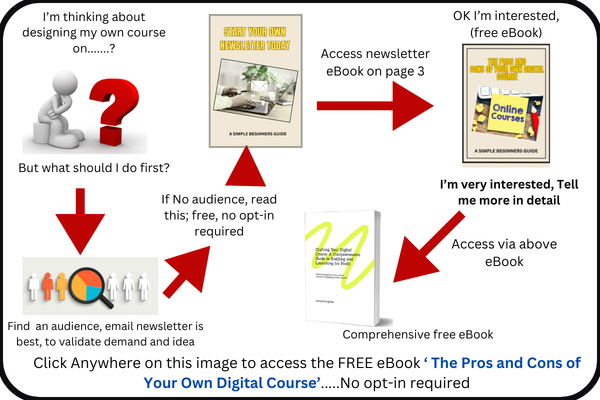
Download the Digital Course Starter Guide
Then decide if a digital course is something you would like to do.
If it is access the more detailed course through the starter guide.
You can download the Digital Course Starter Guide below. CLICK ON THE IMAGE TO GET IMMEDIATE ACCESS.
Start there.
Build strategically.
Then sell confidently.