
Turning 50 is often when your financial picture gets more complicated. Retirement might be on the horizon, a pension may not stretch as far as you hoped, or you simply want more breathing room each month. A second income can make a genuine difference, whether that means covering everyday costs, building a small savings cushion, or keeping yourself engaged with work you actually enjoy.
The good news is that being over 50 gives you something most younger people do not have: decades of real experience, a reliable network, and a clearer sense of what you are willing to do.
This article covers 15 practical second income ideas suited to people in their 50s and beyond. Rather than lumping everything together, the ideas are grouped by how they fit into your life: skill-based, online, local, selling-based, and longer-term. Each section also flags what you will realistically need to get started and where the trade-offs tend to appear.
You do not need to try everything. The goal is to find one option that suits your energy, your schedule, and what you already know.
How To Choose The Right Income Stream After 50
Not every side hustle makes sense at this stage of life. The best side hustles for you are the ones that fit around your health, your commitments, and what you actually want your days to look like. Before picking a side gig, it helps to think clearly about three things: what you can sustain, what it will cost you upfront, and whether it will still work in a year.
Match The Work To Your Energy, Mobility, And Time
Some side hustle ideas require you to be on your feet for hours or available at short notice. Others can be done sitting down, at your own pace, in a few hours a week. Be honest about both.
Suppose you have a health condition or simply prefer a quieter pace, lean towards desk-based or home-based side gigs such as writing, bookkeeping, or online tutoring. If you enjoy being active and out of the house, local options like pet sitting or tour guiding may suit you better.
Think about your weekly schedule too. Are you free most mornings but tied up on weekends? Some side gigs offer complete flexibility; others, like rideshare driving, tend to earn better during peak hours.
Start With Low-Cost Ideas Before Investing Money
Many of the best side hustles for seniors cost very little to start. You may already have the tools, skills, or space you need. Be cautious about any idea that asks you to spend money upfront before you have tested whether it works for you.
Freelance writing, consulting, and selling second-hand items online all have minimal startup costs. Courses, software subscriptions, and paid platforms can wait until you have confirmed there is an income there to justify them.
Think About Flexibility, Enjoyment, And Reliability
A side gig that burns you out in six weeks is not a good second income. Look for work you can genuinely picture doing for a year or two. The most sustainable options tend to offer flexible hours, have repeat clients or customers, and connect in some way to things you already enjoy or know well.
Reliability matters too, especially if you are topping up a fixed income. Platforms that pay inconsistently or that depend on constant marketing effort may not suit everyone at this stage.
Use Your Experience For Higher-Paying Work
If you have spent decades building skills in a profession, that knowledge has real market value. Consulting, coaching, bookkeeping, translation, writing, and creative services all allow you to charge for what you already know rather than starting from scratch.
Consulting And Career Coaching
Working as a consultant means helping businesses or individuals solve problems in your area of expertise. If you spent 20 or 30 years in marketing, HR, finance, healthcare, or any specialist field, people are willing to pay for your perspective.
Career coaching is a related path. As a career coach, you help people navigate job searches, prepare for interviews, or change direction professionally. Life coaching is broader still, supporting clients through transitions in their personal or professional lives.
You can set your own hours and take on as few or as many clients as you like. Hourly rates for experienced consultants and career coaching professionals typically start around $75 and can go considerably higher.
Bookkeeping, Notary Work, And Translation
Bookkeeping is well-suited to people with a background in finance, accounts, or administration. Small business owners often need someone to handle invoicing, expenses, and basic financial records without wanting to hire a full-time employee. Bookkeepers work flexible schedules and can manage multiple clients.
A notary public serves as a legal witness for document signings, including property deeds, wills, and contracts. The process to become a notary public varies by state but is generally low-cost and straightforward.
If you speak more than one language fluently, working as a translator or interpreter can be steady and well-paid. Hospitals, legal offices, and businesses often need reliable translators, and the work can often be done remotely.
Writing, Freelance Writing, And Content Services
Freelance writing is one of the most accessible skill-based side hustles for people over 50. As a content writer or freelance writer, you produce articles, blog posts, newsletters, or website copy for businesses and publications.
Your professional background gives you an edge. A former nurse writing health content, or a retired teacher producing educational material, brings genuine authority that clients value. Platforms like Upwork and Fiverr can help you find your first clients, or you can approach niche publications directly.
Greeting card writing is a less obvious but real option. Companies like American Greetings and smaller independent publishers pay for original card verses and sentiments, often on a per-piece basis.
Graphic Design, Event Planning, And Music Lessons
If you have design skills, graphic designer work for small businesses, local charities, or online sellers can be done entirely from home. Tools like Canva have lowered the barrier to entry, though clients looking for polished results will pay more for professional experience.
Event planning suits detail-oriented people who enjoy co-ordinating logistics. Starting locally with small events, parties, or community gatherings is a practical way to build a portfolio without overcommitting.
Music teacher work is a natural fit if you play an instrument or sing. Lessons can be offered in person or via video call, and demand from both children and adults returning to music later in life tends to be fairly steady.
Flexible Online Work You Can Do From Home
Home-based online work is particularly well-suited to people who want flexible hours without commuting. Whether you prefer working with people, completing tasks independently, or picking up small jobs as you please, there are platforms designed to connect you with paying work quickly.
Online Tutoring And Subject Teaching
Online tutoring is one of the more reliable second income options for people with teaching experience or strong subject knowledge. As an online tutor, you work with students over video call, helping them with subjects ranging from maths and science to languages and test preparation.
Platforms like Wyzant allow you to set your own hourly rate and choose when you are available. Many tutors over 50 find that their calm, experienced manner is an asset with students who have struggled elsewhere.
You do not need a teaching qualification for all subjects, though having one does allow you to charge more. Starting at $25 to $40 per hour is common; experienced tutors in specialist areas often earn considerably more.
Freelance Platforms And Remote Client Work
Upwork and Fiverr are the two most widely used platforms for finding freelance clients online. Upwork tends to suit longer-term projects and professional services; Fiverr works better for one-off creative or technical tasks.
Both platforms take a commission, so factor that into your pricing. Building a profile takes a little patience at first, but once you have a few positive reviews, work tends to come more steadily.
Rev is worth mentioning if you are a fast, accurate typist. It pays for transcription and captioning work, and you can complete jobs at your own pace without any client interaction required.
Surveys And Small Task Sites
Survey and task sites like Swagbucks, Survey Junkie, InboxDollars, and KashKick are not going to replace a salary, but they can generate a small, consistent amount of extra cash in your spare time.
These are best treated as background earners rather than primary income sources. You might earn $20 to $100 per month depending on how much time you put in. The main appeal is that there is no skill requirement and you can stop and start whenever you like.
Be realistic: the hourly rate is low. Use these sites to fill odd pockets of time rather than as a strategy on their own.
Local Services That Turn Spare Time Into Cash
Getting out of the house and doing something useful in your community suits a lot of people over 50 who want work that feels active and social rather than screen-based. Several local service options are easy to start, cost very little, and let you build a small but steady client base.
Pet Sitting, Dog Walking, And House Sitting
Pet sitting and dog walking are genuinely enjoyable for people who love animals and want flexible, low-pressure work. You can take bookings around your schedule and build up a small group of regular clients through word of mouth.
Rover and Wag are the main platforms for finding pet care clients in the US. Both handle booking and payment, which removes much of the admin. Rover lets you offer dog walking, drop-in visits, and overnight stays; Wag focuses more on on-demand walking jobs.
House sitting works alongside pet care naturally. Many pet owners want someone to stay in or check on their home while they travel. It rarely pays highly, but it can be combined with other local services to build a useful income.
Driving for Uber or Lyft gives you complete control over when you work. Many drivers over 50 find they enjoy the social aspect, particularly if they prefer short daytime shifts rather than late nights.
The main consideration is wear on your vehicle. Mileage adds up quickly, and maintenance costs need to be factored into what you actually take home. As a rideshare driver, it is worth calculating your real hourly rate after expenses before relying on it as income.
Neighbourhood help, such as grocery shopping, errands, or light gardening for elderly neighbours, is less structured but can build into a reliable small income. Apps like TaskRabbit can connect you with local work, or a simple flyer in your community can bring in clients directly.
Tour Guiding And Community-Based Work
If you know your local area well and enjoy talking to people, working as a tour guide can be a rewarding way to earn extra cash. Walking tours, historical tours, and niche interest tours are all popular with visitors.
You can run tours independently or sign up with a platform. Getting started usually just requires some research into what makes your area interesting and a willingness to practise your narrative a few times before your first paid group.
Community-based work, such as teaching a craft at a local centre, volunteering with paid expenses, or running a neighbourhood skills workshop, can also generate modest income while keeping you socially connected.
Selling, Reselling, And Renting Out What You Already Have
If you have a spare room, a garage full of things you no longer use, or a creative skill, turning those existing assets into income is one of the least complicated ways to start earning extra money. Startup costs are low because you are working with what you already have.
Reselling On Popular Marketplaces
Reselling is one of the most accessible ways to make extra money without any particular skill. You buy items cheaply at car boot sales, charity shops, or estate sales, then sell them at a profit on eBay, Facebook Marketplace, or Craigslist.
Clothing, vintage items, books, tools, and small household goods tend to move well. eBay suits buyers and collectors looking for specific items; Facebook Marketplace works better for local, bulkier goods where shipping is impractical.
Poshmark is specifically designed for clothing and accessories and has a straightforward listing process. Amazon is worth considering if you plan to resell books or brand-new goods in volume, though it has more complexity and fees to navigate. Google the best resale website for your particular items in your country.
Selling Handmade Or Digital Products
If you make things, Etsy is the natural home for selling online. Handmade jewellery, ceramics, knitted items, artwork, and home décor all have consistent buyers on the platform.
Digital products are worth considering if you have knowledge to package up. Templates, printable planners, patterns, or short guides can be created once and sold repeatedly, making them one of the more genuinely passive income options available to creatives. Etsy and your own website are both viable places to sell them.
Selling digital products has almost no ongoing cost once the product is made, which is a real advantage for people who want income without constant effort.
Renting Out A Spare Room Or Holiday Space
If you have a spare room or a second property, renting through Airbnb or VRBO can generate meaningful income, especially if you live near a city, tourist area, or event venue.
Airbnb lets you rent a room within your home or your whole property, and you set your own availability. VRBO tends to attract longer-stay guests and is better suited to whole-property rentals.
The main trade-offs are time spent on hosting duties and the need to meet local regulations and tax requirements. It is worth researching the rules in your state before listing, as short-term rental laws vary significantly.
Building Longer-Term Income Without Taking Big Risks
Some income streams take a little longer to build but can eventually run with very little active effort on your part. These are worth starting early, even in a small way, because they tend to compound gradually over time.
Passive Income Ideas That Start Small
Passive income, in the truest sense, means earning money from something you set up once that continues to pay out with minimal maintenance. For most people over 50, the most realistic passive income sources are things like dividend-paying stocks, interest from high-yield savings accounts, or renting out a property or room.
Starting small is perfectly sensible. A savings account earning 4-5% interest, a few shares in a dividend-focused fund, or one Airbnb room can all contribute to a monthly extra income without requiring you to monitor them constantly.
The key is to avoid schemes that promise high returns with little effort. Real passive income takes some upfront setup; anything that claims otherwise is worth treating with scepticism.
Affiliate Marketing And Content-Based Income
Affiliate marketing means earning a commission when someone uses your recommendation to buy a product or service. If you have a blog, a YouTube channel, or even a newsletter with a small but engaged audience, affiliate programmes can generate extra income alongside your content.
This works best when your content is genuinely useful and your recommendations are honest. A blog about cooking for empty nesters, a channel on woodworking, or a newsletter about retirement finances can all attract loyal readers who trust your suggestions.
It takes time to build an audience. Most people see little income in the first few months, so this suits people who enjoy writing or creating content anyway, rather than those looking for quick results.
You can Learn Much More About The Benefits of Affiliate Marketing and how to do it by clicking HERE
How To Test One Idea Before Committing
Before investing significant time or money into any second income idea, test it on a small scale first. Offer one or two clients a trial rate, list a handful of items online before building a full shop, or run one tour before promoting a regular schedule.
This approach tells you quickly whether the income is realistic, whether the work suits you, and whether the demand is actually there. It also protects you from spending money on courses, tools, or subscriptions before you know the idea has legs.
Pick the one option from this article that feels most natural given your skills and lifestyle. Start with that, keep your costs low, and give it a realistic amount of time, perhaps two to three months, before deciding whether to continue or try something else.
Verdict
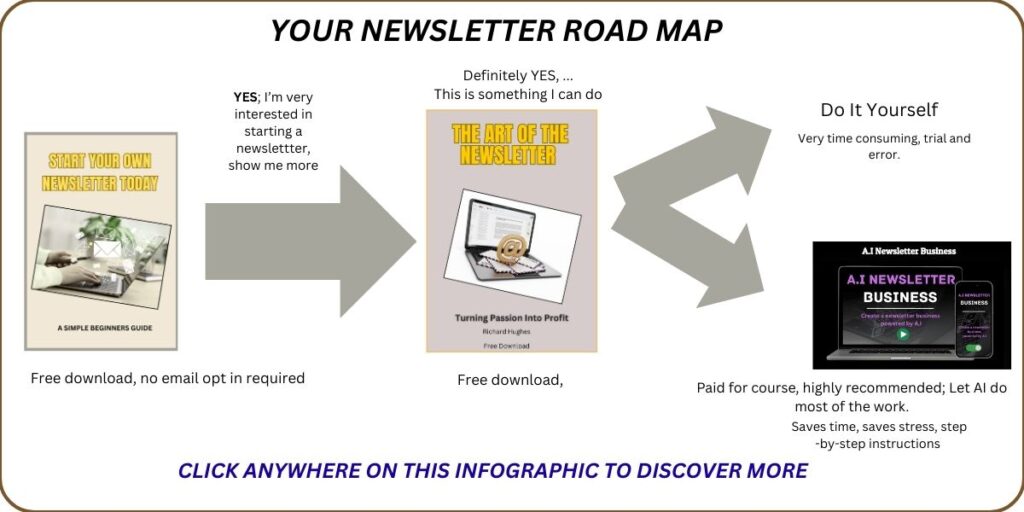
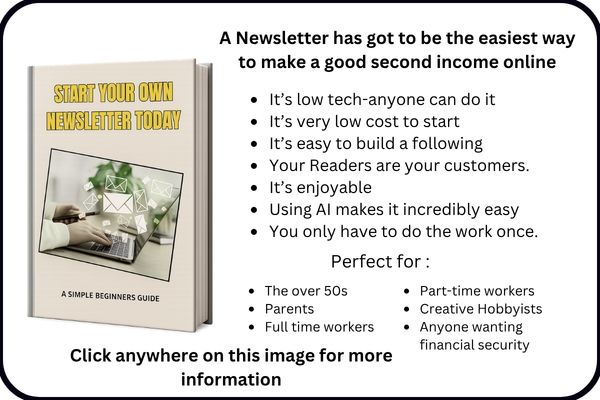
In my opinion, by far the easiest and most fun way to earn a very good second income is to start an online newsletter. You don’t have to be an expert at anything; you just have to be yourself. It’s that simple.
And thanks to the AI revolution, most of the work can be done for you. I provide two FREE eBooks to help you decide if this is something you would like to pursue. Believe me, it’s easy, it’s rewarding, it’s stimulating, and it’s exciting.
Take a look