
Contents
- 1 What Is Affiliate Marketing: A Beginner’s Guide
- 2 What Affiliate Marketing Means in Practice
- 3 How Tracking, Clicks and Commissions Work
- 4 The Main Ways Affiliates Promote Offers
- 5 Choosing the Right Program and Niche
- 6 Beginner Paths to Getting Started
- 7 Mistakes, Expectations and Measuring Results
- 8 Frequently Asked Questions
- 8.1 How do beginners get started with affiliate marketing step by step?
- 8.2 Can you start affiliate marketing with no money, and what are the realistic options?
- 8.3 How can you do affiliate marketing using only a mobile phone?
- 8.4 What are some clear examples of affiliate marketing in real life?
- 8.5 Is affiliate marketing a pyramid scheme, and how can you tell the difference?
- 8.6 Is it realistic to make £100 a day from affiliate marketing, and how long might it take?
What Is Affiliate Marketing: A Beginner’s Guide
If you have ever clicked a link in a blog post or video description and then bought a product, you have already seen affiliate marketing in action.
What is affiliate marketing? It is a performance-based marketing model where you earn a commission by promoting someone else’s products or services using a unique tracking link.
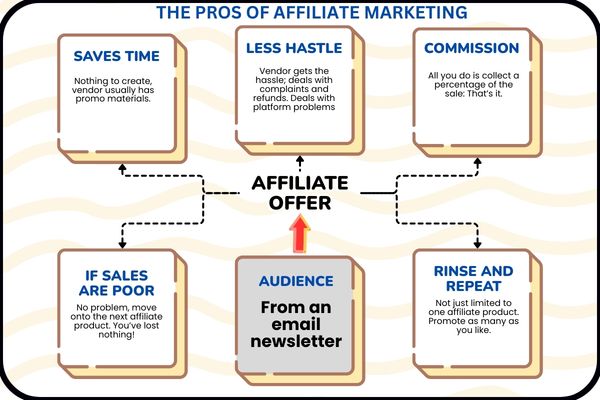
No product creation, no inventory, and no customer support required on your end.
The affiliate marketing industry topped $12 billion in spending in 2025 alone, and it continues to grow. That growth is not slowing down because the model works well for everyone involved. Brands only pay when they get results, and affiliates earn passive income by connecting the right audience with the right product.
This guide walks you through the full picture. You will learn how affiliate links and cookies track sales, what the common payout models look like, and how beginners actually get started. The goal is to give you a clear, honest explanation so you can decide if this path makes sense for you.
Key Takeaways
- Affiliate marketing lets you earn commissions by recommending products through unique tracking links, with no need to create or ship anything yourself.
- Tracking cookies, commission structures and payout models like pay-per-sale and pay-per-lead are the core mechanics that determine how and when you get paid.
- Realistic results take months of consistent effort, and choosing the right niche, programme and content approach matters far more than chasing shortcuts.
What Affiliate Marketing Means in Practice
Affiliate marketing connects three parties: the seller who owns the product, the affiliate who promotes it, and the consumer who buys it. The model is built on performance, meaning you only earn when a specific action happens, usually a sale.
A Simple Definition for Beginners
At its core, affiliate marketing is a referral partnership. You sign up for an affiliate program, receive a unique link, and share that link through your content. When someone clicks your link and makes a purchase, the seller pays you a commission.
You do not handle shipping, returns, or customer service. Your role is to recommend products your audience is genuinely interested in and to do it well enough that people click and buy.
The Core Players: Seller, Affiliate and Consumer
The seller (also called the merchant or brand) creates the product and runs the affiliate program. The affiliate (that is you) promotes the product through a blog, YouTube channel, social media account, or email list. The consumer clicks the affiliate link and completes a purchase.
Each party benefits. The seller gets new customers without paying upfront for advertising. You earn a commission on each sale. The consumer discovers a product through a recommendation they trust.
Why Brands Use Performance-Based Partnerships
Traditional advertising requires brands to spend money before knowing whether an ad will convert. With affiliate marketing, the brand pays only after a confirmed sale or lead.
This makes affiliate programmes one of the most cost-efficient customer acquisition channels available. It also means brands are eager to recruit affiliates who can drive quality traffic, which creates real opportunity for beginners willing to put in the work.
How Affiliate Marketing Differs From Influencer Marketing and Advertising
Influencer marketing typically involves a flat fee or a sponsorship deal. The influencer gets paid regardless of how many sales they generate. Affiliate marketing, by contrast, is strictly performance-based. You earn only when a tracked action is completed.
Paid advertising is something the brand controls and funds directly. As an affiliate marketer, you are an independent partner. You choose how and where to promote, and you are paid on results rather than impressions or reach.
How Tracking, Clicks and Commissions Work
The entire affiliate marketing model runs on accurate tracking. Without it, sales cannot be attributed to the right affiliate, and commissions cannot be paid. This section covers what happens between the moment someone clicks your link and the moment you receive a payout.
What an Affiliate Link Does
An affiliate link is a unique URL assigned to you by the seller or affiliate network. It contains a tracking ID that identifies you as the referrer. When a visitor clicks that link, the tracking system records which affiliate sent them.
Every affiliate in a programme gets a different link. This is how the seller knows exactly who drove each sale.
How Tracking Links and Cookies Attribute Sales
When someone clicks your affiliate link, a small file called a cookie is placed in their browser. That cookie stores your tracking ID and a timestamp. If the visitor returns to the seller’s website later and makes a purchase, the cookie tells the system to credit the sale to you.
Most affiliate programmes rely on this cookie-based tracking, though some also use server-side tracking or first-party data for greater accuracy. The key point is that the sale does not need to happen the instant someone clicks. The cookie handles the time gap.
Cookie Duration and Cookie Window Explained
The cookie duration (also called the cookie window) is the length of time the tracking cookie stays active. If a visitor clicks your link today and the cookie window is 30 days, any purchase they make within those 30 days earns you a commission.
Cookie windows vary widely. Amazon Associates offers a 24-hour window, while many software affiliate programmes offer 30 to 90 days. Some even offer 120 days or longer. A longer cookie window gives you more time for the customer to decide, which generally increases your chances of earning.
Common Payout Models: Pay-Per-Sale, Pay-Per-Lead, Pay-Per-Click and Pay-Per-Install
Not every affiliate programme pays the same way. Here are the four most common models:
| Model | Abbreviation | You Get Paid When… |
|---|---|---|
| Pay-Per-Sale | PPS / CPA | The customer completes a purchase |
| Pay-Per-Lead | PPL | The customer submits a form, signs up, or requests a quote |
| Pay-Per-Click | PPC | The customer clicks through to the seller’s site |
| Pay-Per-Install | PPI | The customer installs an app or software |
Pay-per-sale is the most common model and what most beginners encounter first. Pay-per-lead is popular in finance and insurance niches. Pay-per-click and pay-per-install are less common and typically offer lower payouts per action.
Commission Rates, Commission Structure and Recurring Commission
Commission rates vary based on the product type and industry. Physical products tend to offer lower rates, often 1% to 10%. Digital products and software subscriptions frequently pay 20% to 50% or more.
Some programmes use a tiered commission structure, where your rate increases as you generate more sales. Others offer a recurring commission, meaning you earn a payout every month the customer you referred stays subscribed. Recurring commissions are especially valuable because a single referral can pay you for months or even years.
Your affiliate earnings ultimately depend on three numbers: your traffic volume, your conversion rate, and your earnings per click. Tracking all three helps you understand which content and offers generate the most affiliate income.
The Main Ways Affiliates Promote Offers
Traffic is the engine behind every affiliate commission. Whether you write blog posts, record videos, or build email lists, the method you choose shapes your content strategy, your audience relationship, and your earning potential.
Blogging, SEO and Organic Search Traffic
Blogging remains one of the most reliable ways to earn affiliate income. You create articles that target specific keywords your audience searches for, and those articles attract organic search traffic month after month.
The advantage of SEO is that once an article ranks well, it can drive traffic and earn commissions with little ongoing effort. The downside is that it takes time. Most new blogs need 6 to 18 months of consistent content creation before organic traffic becomes meaningful.
Focus on long-tail keywords with clear buyer intent. A search like “best budget standing desk for home office” signals someone closer to buying than a search like “standing desks.”
Product Reviews, Comparison Articles and How-To Guides
Product reviews, comparison articles, and how-to guides are the highest-converting content types for affiliate marketers. Wirecutter, one of the most successful review sites, built an entire business on thorough, trustworthy product reviews with affiliate links.
- Product reviews give your honest take on a single product.
- Comparison articles put two or more products side by side.
- How-to guides and tutorials solve a specific problem and recommend tools along the way.
Each format works because the reader already has buying intent. They are looking for help making a decision, and your content provides that help.
YouTube, TikTok, Instagram and Pinterest Content
Video and social media platforms open up affiliate marketing to people who prefer creating visual content over written articles. YouTube is especially strong for product reviews and tutorials. You place your affiliate links in the video description.
TikTok and Instagram work well for shorter product recommendations, though income from these platforms can be inconsistent because it depends heavily on algorithm reach. Pinterest is useful for driving traffic to blog posts or landing pages that contain your affiliate links.
The key across all social media is building trust with your audience before expecting them to click and buy.
Email Marketing, Lead Magnets and Landing Pages
Email marketing gives you direct access to your audience without relying on search engines or social media algorithms. You build a list by offering a lead magnet, such as a free checklist, guide, or template, and then send helpful emails that include affiliate links where relevant.
A dedicated landing page helps convert visitors into subscribers. Once someone is on your list, you can recommend products over time, building trust before asking for a click. Email lists tend to have higher conversion rates than most other traffic sources because the audience has already opted in to hear from you.
Paid Ads and Other Traffic Sources
Paid advertising through platforms like Facebook Ads or Google Ads can drive traffic to affiliate offers quickly. You skip the waiting period that comes with SEO, but you pay for every click.
This approach suits experienced affiliates who understand their numbers well. If your affiliate commission is lower than your ad cost per conversion, you lose money. Beginners are generally better off starting with free traffic sources and adding paid ads later once they know which offers convert.
Get the low down on paid and organic traffic
Choosing the Right Program and Niche
Your niche and affiliate programme choices affect everything from commission rates to audience trust. Picking a profitable niche and a reliable programme early saves you months of wasted effort.
Physical Products Versus Digital Products
Physical products, such as electronics, clothing, or home goods, typically pay lower commission rates, often between 1% and 10%. The upside is that consumers buy physical goods frequently, so volume can make up for the lower rate.
Digital products, including software subscriptions, online courses, and eBooks, often pay 20% to 50% or higher. Many digital programmes also offer recurring commissions. A single referral to a software tool that pays you monthly can be far more valuable over time than a one-off physical product sale.
How to Find Affiliate Programs That Fit Your Audience
Start by asking which products your audience already uses or needs. Search for those products plus “affiliate programme” to see if one exists. Most established brands run one.
Check three things before you join:
- Commission rate and whether it is one-time or recurring
- Cookie window length
- Payout threshold and payment method
A high commission rate means nothing if the product does not match your audience. Relevance always comes first.
Affiliate Networks Versus Direct Brand Programmes
An affiliate network is a marketplace that hosts programmes from many different brands in one place. You sign up once and gain access to hundreds of offers. Direct brand programmes, by contrast, are managed by the brand itself.
Networks offer convenience and variety. Direct programmes sometimes offer higher commission rates or better cookie windows because there is no network middleman. Many experienced affiliates use a mix of both.
Popular Platforms and Examples for Beginners
Here are some well-known starting points:
| Platform | Type | Best For |
|---|---|---|
| Amazon Associates | Network (retail) | Physical products across nearly every niche |
| ShareASale | Network | Wide range of brands and product types |
| CJ Affiliate | Network | Established brands and higher payouts |
| Awin | Network | Global brands, especially in Europe |
| Impact | Network | SaaS and technology brands |
| ClickBank | Network | Digital products and online courses |
| Shopify Affiliate Program | Direct | Ecommerce and online business niches |
Amazon Associates is the most popular starting point for beginners because of its massive product catalogue. As you grow, you will likely add programmes with higher commission rates and longer cookie windows.
Beginner Paths to Getting Started
Getting started does not require a large budget or years of experience. It does require choosing an approach that matches your skills and sticking with it long enough to see results.
Unattached, Related and Involved Approaches
There are three recognised approaches to affiliate marketing, each with a different level of personal connection to the product.
- Unattached affiliate marketing: You have no personal connection to the product. You run paid ads pointing to an affiliate offer. This is high-risk for beginners because ad costs can easily exceed commissions.
- Related affiliate marketing: You operate in a niche you know well but may not have personally used every product you recommend. Most bloggers and content creators fall into this category.
- Involved affiliate marketing: You personally use and genuinely endorse the product. This builds the highest audience trust and tends to produce the best conversion rates.
If you are just starting out, the related or involved approach is the most realistic path.
How to Start Affiliate Marketing Step by Step
- Pick a niche you know or care about where affiliate programmes exist.
- Choose a content platform such as a blog, YouTube channel, or social media account.
- Join one or two affiliate programmes that match your niche.
- Create helpful content that naturally incorporates your affiliate links.
- Promote your content through SEO, social media, or email to drive traffic.
- Track your results and adjust based on what performs.
You do not need to do everything at once. Start with one platform and one programme, then expand as you learn.
Building Audience Trust Before You Add Affiliate Links
Trust is the single most important asset you have as an affiliate marketer. If your audience does not trust you, they will not click your links, no matter how good the product is.
Publish several pieces of genuinely helpful content before you add any affiliate links. Answer real questions. Solve real problems. When you do recommend a product, be honest about both its strengths and its weaknesses. Readers can tell the difference between a genuine recommendation and a sales pitch.
Creating Your First Review or Tutorial Content
Your first piece of affiliate content should be a product review or a tutorial that solves a specific problem. Choose a product you have actually used or thoroughly researched.
Structure the content clearly. Cover what the product does, who it is best for, any drawbacks, and why you recommend it. Place your affiliate link where it makes sense as a natural next step, not as a pop-up or a wall of links. One or two well-placed links outperform a dozen scattered ones.
Mistakes, Expectations and Measuring Results
Most beginners do not fail because the model is broken. They fail because of a handful of avoidable mistakes and unrealistic expectations about how quickly affiliate income grows.
Common Affiliate Marketing Mistakes Beginners Make
- Promoting too many products at once instead of focusing on a few you know well
- Choosing a niche based only on commission rates rather than genuine interest or audience fit
- Ignoring SEO and expecting social media alone to deliver consistent traffic
- Hiding affiliate relationships instead of disclosing them openly (this also violates FTC guidelines in the US)
- Giving up after 60 to 90 days because results have not appeared yet
Each of these mistakes is fixable, but the earlier you avoid them, the faster you see progress.
What Affects Conversions and Earnings
Your affiliate earnings come down to three factors: traffic, conversion rate, and earnings per click. You can increase traffic through better SEO or broader content. You can improve conversion rate through stronger calls-to-action, better link placement, and higher-quality content. Earnings per click depends on the commission rates and products you promote.
Small improvements in any one of these areas compound over time.
Using Analytics to Improve Performance
Set up Google Analytics on your website from day one. Track which pages get the most traffic, where visitors come from, and how they behave on your site. Most affiliate networks also provide dashboards showing clicks, conversions, and earnings.
Review your numbers weekly. If a page gets traffic but no clicks, your call-to-action or link placement may need work. If a page gets clicks but no conversions, the product or offer might not be the right fit.
Setting Realistic Income and Scalability Expectations
Most beginners earn very little in the first three to six months. That is normal. Affiliate marketing is not a get-rich-quick path. It is a business that compounds over time as your content library, traffic, and audience trust grow.
Realistic benchmarks for a solo beginner working part-time: $200 to $1,500 per month within 12 to 24 months. Full-time affiliate income of $5,000 per month or more is possible but typically takes two to four years of consistent effort.
If you want a structured plan to follow as you build, consider downloading a free affiliate marketing eBook that covers niche selection, content planning, and programme setup in more detail. It is a helpful next step that costs nothing and requires no sign-up.
The scalability is real. Once a piece of content ranks and earns, it can continue generating passive income for months or years with only occasional updates.
Frequently Asked Questions
How do beginners get started with affiliate marketing step by step?
Pick a niche you understand, choose one content platform such as a blog or YouTube channel, and join an affiliate programme that fits your topic. Create helpful content that includes your affiliate links naturally, then focus on driving traffic through SEO or social media. Track your results and adjust as you learn.
Can you start affiliate marketing with no money, and what are the realistic options?
Yes. You can start with a free blog on platforms like WordPress.com, a YouTube channel, or social media accounts, all of which cost nothing. The trade-off is that free platforms give you less control and customisation. A self-hosted blog with a domain name costs roughly $50 to $100 per year and gives you more flexibility.
How can you do affiliate marketing using only a mobile phone?
You can create short-form video content on TikTok or Instagram Reels, post product recommendations on social media, or write email newsletters using mobile apps. The main limitation is that long-form content like blog posts is harder to produce on a phone. For video-first affiliates, a phone is a perfectly viable starting tool.
What are some clear examples of affiliate marketing in real life?
Wirecutter publishes detailed product reviews with affiliate links to retailers like Amazon. A YouTube tech reviewer includes affiliate links in the video description for every product they test. A personal finance blogger links to credit card or savings account sign-up pages and earns a commission for each approved application.
Is affiliate marketing a pyramid scheme, and how can you tell the difference?
No. Affiliate marketing pays you for driving real sales or leads to a genuine product or service. A pyramid scheme pays participants mainly for recruiting new members rather than selling an actual product. If the income model depends on recruitment rather than product sales, it is not affiliate marketing.
Is it realistic to make £100 a day from affiliate marketing, and how long might it take?
Earning £100 a day (roughly $125) is realistic but not quick. Most affiliates who reach that level have been creating content consistently for 12 to 24 months and have built a library of at least 30 to 50 well-optimised articles or videos. The timeline depends on your niche, competition, and how often you publish.
YOUR NEXT MOVE
IF YOU DON’T HAVE AN AUDIENCE YET, A NEWSLETTER, BLOG, or SOCIAL FOLLOWING THEN CLICK ON THE INFOGRAPHIC BELOW
But if you do have an audience, click on this infographic.